The Sportsman 4000 Watt Generator offers reliable power for camping, emergencies, and job sites, blending portability with sufficient output for essential needs.
Overview of the Sportsman 4000 Watt Generator
The Sportsman 4000 Watt Generator is a portable power solution designed for a variety of applications, from recreational activities like camping and tailgating to providing backup power during emergencies. This generator delivers 4000 peak watts and 3500 running watts, making it capable of powering multiple appliances and tools simultaneously.
Its robust engine and user-friendly design ensure reliable performance and ease of operation. The generator features a durable construction, making it suitable for outdoor use. Understanding its components and proper operation, as detailed in the manual, is crucial for maximizing its lifespan and ensuring safe usage. It’s a versatile power source for both home and on-the-go needs.
Key Features and Specifications
Key features of the Sportsman 4000 Watt Generator include a powerful OHV engine, multiple outlets (typically including 120V and 12V DC), and a low-oil shutdown feature for engine protection. It boasts a runtime of up to 12 hours on a full tank, depending on the load.
Specifications generally include a peak wattage of 4000 watts and running wattage of 3500 watts. Fuel capacity is around 3.8 gallons, utilizing unleaded gasoline. The unit typically weighs approximately 165 pounds, making it relatively portable. Detailed specifications, including voltage, frequency, and dimensions, are outlined in the owner’s manual for precise information and optimal performance.
Safety Precautions
Always operate the Sportsman 4000 Watt Generator outdoors in a well-ventilated area to prevent carbon monoxide poisoning and ensure electrical safety.
Important Safety Warnings
Prior to operation, carefully read and understand all instructions within the Sportsman 4000 Watt Generator manual. Improper use can lead to serious injury or property damage. Never operate the generator indoors or in partially enclosed spaces due to the risk of deadly carbon monoxide buildup. Ensure adequate ventilation is present at all times.
Always disconnect the generator from any connected appliances before performing maintenance. Do not attempt to modify the generator in any way, as this could compromise its safety features. Keep children and pets away from the generator during operation. Be cautious of hot surfaces, such as the engine and exhaust system, to avoid burns. Regularly inspect the generator for any signs of damage or wear.
Carbon Monoxide Hazards
Carbon monoxide (CO) is a colorless, odorless gas that can be produced by the exhaust of the Sportsman 4000 Watt Generator. Exposure to CO is extremely dangerous and can be fatal. Never operate this generator inside a home, garage, shed, or any enclosed or partially enclosed space, even with ventilation.
Symptoms of CO poisoning include headache, dizziness, weakness, nausea, vomiting, chest pain, and confusion. If you experience any of these symptoms, immediately get fresh air and seek medical attention. Install battery-operated CO detectors in your home and near the generator’s operating location. Be aware that wind direction can change, potentially blowing exhaust fumes into unintended areas.
Electrical Safety Guidelines

Always inspect power cords for damage before use, and never operate the generator with frayed or damaged cords. Avoid overloading the generator by carefully calculating the wattage requirements of all connected appliances. Use heavy-duty extension cords rated for outdoor use and the appropriate amperage.
Ground the generator according to local electrical codes to minimize the risk of electric shock. Never touch the generator with wet hands or while standing in water. Ensure all appliances are properly grounded before connecting them to the generator. Be cautious when connecting sensitive electronics, as voltage fluctuations can occur. Disconnect appliances before refueling the generator.
Generator Components & Identification
Key components include the engine, control panel, recoil starter, fuel tank, and exhaust system; familiarize yourself with each part for safe operation and maintenance.
Control Panel Layout
The control panel is centrally located for easy access to essential functions. You’ll find the power switch, typically labeled “On/Off,” used to initiate or cease generator operation. AC outlets, usually two or three, provide standard 120V power for appliances and tools. A DC outlet (if equipped) offers lower voltage power for specific devices.
Crucially, locate the circuit breaker(s), protecting against overloads. A grounding terminal is present for safety, ensuring proper electrical connection. The choke control adjusts the fuel-air mixture for cold starts. Finally, a low-oil indicator light warns of insufficient oil levels, preventing engine damage. Understanding each control’s function is vital for safe and efficient generator use.
Engine Components
The Sportsman 4000 Watt Generator’s engine is a single-cylinder, four-stroke OHV (Overhead Valve) design, prioritizing fuel efficiency and durability. Key components include the cylinder head, housing the valves and spark plug, responsible for combustion. The cylinder itself contains the piston, driven by expanding gases.
The crankshaft converts the piston’s linear motion into rotational power. A recoil starter provides manual starting capability, while the muffler reduces exhaust noise. The fuel tank stores gasoline, supplying the carburetor for fuel-air mixing. The governor regulates engine speed under varying loads, maintaining stable output. Regular inspection of these components ensures optimal performance and longevity.
Recoil Starter Mechanism
The Sportsman 4000 Watt Generator’s recoil starter is a manual starting system utilizing a spring-loaded pulley and rope. Pulling the rope rapidly winds the spring, storing energy. Releasing the rope allows the spring to unwind, rotating the engine’s crankshaft and initiating combustion.
Proper operation involves gently pulling the rope until resistance is felt, then giving a firm, controlled pull. Avoid rapidly extending the rope or allowing it to snap back, which can cause injury or damage the mechanism. Regular inspection of the rope for fraying and the housing for damage is crucial. Maintaining a smooth recoil action ensures reliable starting, especially in colder conditions.

Starting and Operating Procedures
Before operation, ensure proper ventilation, check oil levels, and connect appliances correctly. Follow the outlined steps for safe and efficient power generation.
Pre-Start Checklist
Prior to initiating the generator, a thorough pre-start checklist is crucial for safe and optimal performance. First, verify the oil level using the dipstick, adding oil if necessary to the ‘full’ mark – ensure you use the correct oil type as specified in the manual. Next, inspect the air filter for cleanliness; a dirty filter restricts airflow and reduces efficiency. Then, check the fuel level, ensuring sufficient fuel for the intended runtime. Also, confirm that all electrical connections are secure and that the generator is positioned on a stable, level surface, away from flammable materials. Finally, disconnect all loads before starting to avoid potential surges. Remember to familiarize yourself with the location of the emergency stop switch.
Starting the Generator (Cold Start)
For a cold start, begin by setting the fuel valve to the ‘on’ position. Next, ensure the choke lever is fully engaged – this enriches the fuel mixture for easier ignition. Then, slowly pull the recoil starter handle until you feel resistance, then pull firmly and smoothly to initiate the engine. Avoid rapid or jerky pulls. If the engine doesn’t start after a few attempts, re-check the choke and fuel valve positions. Once the engine sputters and attempts to start, gradually disengage the choke as the engine warms up. Allow the generator to run for a few minutes to stabilize before connecting any loads. Always monitor for unusual noises or vibrations.
Starting the Generator (Warm Start)
When starting a warm generator, the procedure differs slightly from a cold start. First, ensure the fuel valve is set to the ‘on’ position. Typically, a warm engine won’t require the choke; however, if it struggles to start, briefly engage the choke lever. Then, pull the recoil starter handle with a firm, smooth motion. Avoid excessive force, as a warm engine should start with less effort. If the engine doesn’t ignite immediately, try again without the choke. Once running, allow the generator to stabilize for a short period before connecting appliances. Regular maintenance ensures easier warm starts. Always observe safety precautions.
Maintenance Schedule
Regular upkeep is crucial for longevity. Follow the recommended oil changes, air filter cleaning, and spark plug inspections detailed in this manual.
Oil Change Procedure
Before beginning, ensure the generator is cool and on a level surface. Remove the oil fill cap and drain plug, positioning a suitable container beneath. Allow the used oil to drain completely – this may take several minutes; Consult the manual for the correct oil type and quantity (typically around 0.6 quarts of SAE 10W-30).
Carefully refill the engine with fresh oil, avoiding overfilling. Reinstall the drain plug securely, and then replace the oil fill cap. Dispose of the used oil responsibly at a designated recycling center. Check the oil level with the dipstick to confirm proper filling. Regular oil changes are vital for optimal performance and engine life.
Air Filter Cleaning/Replacement
Locate the air filter housing, usually secured with clips or screws. Remove the cover to access the air filter element. Inspect the filter for dirt and debris; a visibly dirty filter restricts airflow. For foam filters, wash gently with warm water and detergent, then allow to dry completely before re-oiling lightly.
Paper filters should be tapped gently to remove loose dirt, or replaced entirely if heavily soiled. Ensure the filter is seated correctly within the housing before reinstalling the cover securely. Regular air filter maintenance ensures efficient combustion and prevents engine damage. Check the filter frequently, especially in dusty conditions.
Spark Plug Inspection/Replacement
Disconnect the spark plug wire, using a spark plug wrench to carefully remove the plug. Inspect the electrode for wear, carbon fouling, or damage. A healthy spark plug exhibits a tan or gray color. Clean a fouled plug with a wire brush, or replace it if significantly worn or damaged.
Gap the new spark plug to the manufacturer’s specification (refer to the technical specifications section). Reinstall the spark plug, tightening it to the correct torque to avoid damage. Reconnect the spark plug wire securely. Regular spark plug maintenance ensures reliable starting and optimal engine performance. Replace annually or as needed.
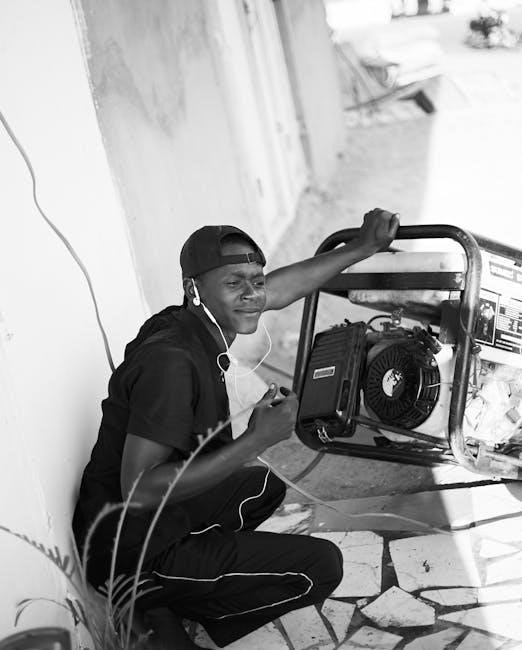
Troubleshooting Common Issues
Addressing typical problems like starting failures, reduced power, or overload trips ensures optimal performance and extends the lifespan of your Sportsman 4000 generator.

Generator Won’t Start
If your Sportsman 4000 Watt Generator fails to start, begin with the basics. Ensure the fuel tank isn’t empty and contains fresh gasoline. Check the oil level; a low oil level activates a safety shut-off. Verify the spark plug is clean and properly connected.
Next, examine the fuel valve – it must be in the ‘on’ position. Inspect the air filter for obstructions, as a clogged filter restricts airflow. If using the recoil starter, confirm it’s not damaged and engages smoothly.
For electric start models, check the battery connection and charge. If issues persist, consult a qualified technician, as internal components may require professional attention. Remember safety first!
Low Power Output
Experiencing low power output from your Sportsman 4000 Watt Generator? First, confirm you aren’t exceeding the generator’s running wattage. Overloading causes reduced performance and potential damage. Check the air filter; a dirty filter restricts airflow, diminishing power.
Inspect the spark plug for fouling or wear, replacing it if necessary. Ensure the fuel is fresh and the fuel valve is fully open. A partially clogged carburetor can also limit power; consider using a fuel stabilizer.
Verify all connections are secure and that extension cords are appropriately sized for the load. If the problem continues, professional servicing may be required to diagnose internal issues.
Overload Protection Tripping
If your Sportsman 4000 Watt Generator’s overload protection is frequently tripping, it indicates the connected load exceeds the generator’s capacity. Immediately disconnect some appliances or devices to reduce the total wattage demand. Remember to account for starting wattage, which is higher than running wattage for many appliances.
Ensure you’re not using extension cords that are too long or have an insufficient gauge, as they can cause voltage drop and trigger the overload protection. Verify all connected devices are functioning correctly and not drawing excessive power due to a fault.
Repeated tripping suggests a potential issue with the generator itself; professional inspection is recommended.

Technical Specifications
The Sportsman 4000 boasts a robust design, delivering 4000 peak watts and 3500 running watts, fueled by gasoline with a 3.8-gallon tank capacity.
Voltage and Frequency
The Sportsman 4000 Watt Generator is engineered to deliver consistent and reliable power output, crucial for a variety of applications. This generator produces a standard voltage of 120V, making it compatible with most common household appliances and power tools found in North America.
Furthermore, it operates at a frequency of 60Hz, ensuring stable performance for sensitive electronics. Maintaining a stable frequency is vital to prevent damage to devices like laptops, smartphones, and televisions. The generator’s design prioritizes delivering a clean power sine wave, minimizing harmonic distortion and enhancing the longevity of connected equipment. Consistent voltage and frequency are hallmarks of this generator’s dependable operation.

Wattage (Running/Peak)
The Sportsman 4000 Watt Generator boasts impressive power capabilities, defined by its running and peak wattage specifications. The running wattage, or continuous wattage, is 3500 watts, representing the sustained power the generator can consistently deliver over extended periods. This is ideal for powering essential appliances like refrigerators, lights, and power tools simultaneously.
However, when starting appliances with a motor, a surge of power is required. This is where the peak wattage comes into play, reaching 4000 watts. This surge capacity allows the generator to handle the initial power draw of devices like air conditioners or compressors. Understanding both running and peak wattage is crucial for safely and effectively powering your needs.
Fuel Capacity and Type
The Sportsman 4000 Watt Generator is designed for convenient operation with gasoline as its primary fuel source. It features a fuel tank capacity of 3.8 gallons, providing a substantial runtime for extended use. With a full tank, you can expect approximately 12 hours of operation at a 25% load, making it suitable for overnight power or prolonged outages.
Always use fresh, unleaded gasoline with a minimum octane rating of 87. Avoid using fuel blends containing ethanol exceeding 10%, as this can damage the generator’s components. Proper fuel storage in an approved container is essential for safety and maintaining fuel quality. Regularly check the fuel level and replenish as needed to ensure uninterrupted power.