
Ragu Napoletano: A Comprehensive Guide (as of 12/11/2025)
Navigating the digital realm reveals numerous Ragu Napoletano PDF recipes, often showcasing variations in technique and ingredient ratios,
mirroring the sauce’s diverse interpretations.
What is Ragu Napoletano?
Ragu Napoletano is a deeply flavorful, slow-cooked meat sauce originating from Naples, Italy. Unlike its more globally recognized cousin, Bolognese, this ragù emphasizes the quality of the meat and a long, gentle simmering process. It’s a cornerstone of Neapolitan cuisine, traditionally served with specific pasta shapes – a point often highlighted in Ragu Napoletano PDF recipes.
The sauce isn’t simply a topping; it’s a culinary experience. Authentic versions utilize large cuts of beef, pork, and sometimes veal, braised for hours in a rich tomato base. Many Ragu Napoletano PDF guides stress the importance of using San Marzano tomatoes for their sweetness and low acidity. The resulting sauce is intensely savory, with tender, falling-apart meat and a depth of flavor that develops over time. It’s a dish meant to be savored, representing a tradition of family and slow living, often detailed within the instructions of downloadable Ragu Napoletano PDF resources.
Historical Origins of Ragu Napoletano

The roots of Ragu Napoletano trace back to the 18th century Neapolitan aristocracy. Originally, it wasn’t a peasant dish, but rather a luxurious creation born from the abundance of meat available to wealthy families. Early versions, documented in historical cookbooks often referenced in Ragu Napoletano PDF guides, featured elaborate preparations and expensive ingredients.
As the sauce trickled down through social classes, it adapted, becoming more accessible while retaining its core principles of slow cooking and quality ingredients. The rise of tomato cultivation in the region significantly impacted its development. Many Ragu Napoletano PDF recipes acknowledge this evolution, noting the historical shift in preparation methods. The sauce’s enduring popularity is a testament to its ability to connect with Neapolitan identity and culinary heritage, a story frequently recounted within the introductory sections of detailed Ragu Napoletano PDF documents.

Regional Variations within Naples
Within the province of Naples, Ragu Napoletano isn’t monolithic; subtle variations exist from town to town. Coastal areas might incorporate seafood elements, a divergence rarely found in inland versions, though some adventurous Ragu Napoletano PDF recipes explore these fusions. Further inland, differences emerge in the cut of meat used, with some regions favoring chuck roast while others prefer a mix.
These nuances are often highlighted in comprehensive Ragu Napoletano PDF guides, detailing family traditions and local preferences. The quantity of tomatoes and wine also fluctuates, impacting the sauce’s final color and acidity. Examining multiple Ragu Napoletano PDF resources reveals a fascinating patchwork of techniques, demonstrating that “authentic” can be surprisingly fluid. These regional distinctions contribute to the sauce’s rich cultural tapestry, a point often emphasized in the historical context sections of detailed Ragu Napoletano PDF documents.
Key Ingredients for Authentic Ragu Napoletano
Authentic Ragu Napoletano hinges on a few core ingredients, consistently emphasized across reliable sources and detailed in most Ragu Napoletano PDF recipes. These include high-quality cuts of beef – typically chuck, brisket, or rib – alongside pork, often in the form of pork ribs or shoulder. San Marzano tomatoes are paramount, their sweetness and low acidity crucial to the sauce’s depth.
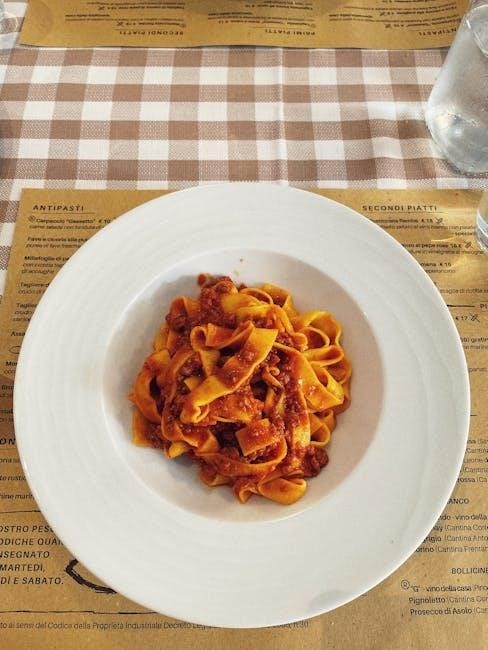
Ragu Napoletano PDF guides invariably stress the importance of dry red wine, used to deglaze the pot and build flavor. Onion, carrot, and celery form the soffritto, the aromatic base. While some Ragu Napoletano PDF variations include a touch of tomato paste, it’s not universally accepted. Olive oil, salt, pepper, and a few basil leaves complete the essential list. Many Ragu Napoletano PDF documents also highlight the significance of ingredient quality, advocating for sourcing the best possible produce and meats.
The Importance of Meat Selection
Meat selection is consistently highlighted as pivotal in any authentic Ragu Napoletano PDF recipe. The sauce’s richness and depth are directly tied to the quality and cuts used. Traditional recipes favor a blend of beef and pork, creating a complex flavor profile. Chuck roast, brisket, and short ribs are frequently recommended in Ragu Napoletano PDF guides for their marbling and ability to break down during the long cooking process.
Ragu Napoletano PDF documents often detail the inclusion of pork ribs or shoulder, adding another layer of savory goodness. Leaner cuts are generally discouraged, as they can result in a drier sauce. Many Ragu Napoletano PDF resources emphasize the importance of sourcing high-quality, ethically raised meat. The goal, as outlined in numerous Ragu Napoletano PDF instructions, is to achieve a tender, flavorful ragu where the meat practically melts into the sauce.
Tomato Choices: San Marzano vs. Other Varieties
Numerous Ragu Napoletano PDF recipes emphatically advocate for San Marzano tomatoes as the gold standard. Their naturally sweet flavor, low acidity, and meaty texture are considered essential for achieving an authentic taste. Ragu Napoletano PDF guides frequently explain that San Marzano tomatoes, grown in the volcanic soil near Mount Vesuvius, possess unique qualities.
However, Ragu Napoletano PDF resources also acknowledge the challenges of sourcing genuine San Marzano tomatoes. Many Ragu Napoletano PDF documents suggest acceptable alternatives if authenticity is compromised, such as plum tomatoes or Roma tomatoes. These substitutes, while not identical, can still yield a delicious ragu. Ragu Napoletano PDF instructions often advise using crushed tomatoes rather than diced, ensuring a smoother sauce. Ultimately, the best tomato choice, according to many Ragu Napoletano PDF guides, depends on availability and personal preference.
The Role of Wine in Developing Flavor
Analyzing Ragu Napoletano PDF recipes consistently reveals wine as a crucial component, not merely a liquid, but a flavor architect. Most Ragu Napoletano PDF guides recommend a dry red wine, often specifying regional Italian varieties like Aglianico or Piedirosso. The wine’s acidity balances the richness of the meat, while its tannins contribute depth and complexity.
Ragu Napoletano PDF instructions emphasize the importance of allowing the wine to fully evaporate during the simmering process. This deglazing action lifts flavorful browned bits from the pot, enriching the sauce. Some Ragu Napoletano PDF documents suggest adding a splash of wine towards the end for brightness. Ragu Napoletano PDF variations exist regarding wine quantity, but the principle remains constant: wine isn’t optional. Ragu Napoletano PDF resources highlight that the wine’s quality directly impacts the final sauce’s character.
Traditional Cooking Methods
Examining Ragu Napoletano PDF recipes underscores the importance of patience and time-honored techniques. These Ragu Napoletano PDF guides consistently detail a slow-cooking process, often spanning several hours – a cornerstone of authentic flavor development. Many Ragu Napoletano PDF documents advocate for initial meat browning in olive oil, building a flavorful foundation.
Ragu Napoletano PDF instructions frequently emphasize layering flavors: starting with aromatics like onions and garlic, followed by the meat, then tomatoes and wine. Ragu Napoletano PDF resources often mention the use of a pignatta, a traditional terracotta pot, for even heat distribution. Ragu Napoletano PDF variations exist in the order of ingredient addition, but the slow simmer remains universal. Ragu Napoletano PDF recipes stress gentle heat, avoiding a rapid boil, to prevent scorching and ensure tender meat.
Slow Cooking: The Cornerstone of Ragu Napoletano
Analyzing Ragu Napoletano PDF recipes reveals a consistent emphasis on extended cooking times. The majority of Ragu Napoletano PDF guides detail simmering periods ranging from six to eight hours, sometimes even longer, as crucial for achieving the sauce’s signature depth. Ragu Napoletano PDF instructions repeatedly highlight that this slow process allows the meat to become incredibly tender and the flavors to meld harmoniously.

Ragu Napoletano PDF resources often explain that rushing this stage compromises the final result, leading to a less complex and satisfying sauce. Ragu Napoletano PDF variations may suggest different heat levels, but all prioritize a gentle, consistent simmer. Ragu Napoletano PDF documents frequently mention stirring occasionally to prevent sticking and ensure even cooking. The patience demanded by these Ragu Napoletano PDF recipes is presented as integral to the sauce’s authenticity.
The Use of a Terracotta Pot (Pignatta)
Examining Ragu Napoletano PDF recipes, the traditional use of a terracotta pot, or pignatta, emerges as a recurring theme, though not always strictly mandatory. Many Ragu Napoletano PDF guides explain that the porous nature of terracotta allows for even heat distribution and gentle evaporation, contributing to the sauce’s rich texture. Ragu Napoletano PDF instructions often note that the pot’s material subtly influences the flavor profile, enhancing the sauce’s complexity.
However, Ragu Napoletano PDF resources acknowledge that a heavy-bottomed Dutch oven can serve as a suitable substitute for those lacking a pignatta. Ragu Napoletano PDF variations sometimes detail seasoning a new terracotta pot to prevent imparting an earthy taste to the ragu. Ragu Napoletano PDF documents frequently emphasize the importance of maintaining the pot’s integrity, avoiding sudden temperature changes to prevent cracking. While traditional, Ragu Napoletano PDF recipes demonstrate flexibility.
Proper Meat Browning Techniques


Analyzing Ragu Napoletano PDF recipes reveals a consistent emphasis on achieving a deep, rich brown on the meat – a crucial step for flavor development. Many Ragu Napoletano PDF guides detail browning the meat in batches to avoid overcrowding the pan, ensuring each piece achieves optimal caramelization. Ragu Napoletano PDF instructions frequently advise against stirring the meat too frequently, allowing it to develop a proper crust.
Ragu Napoletano PDF resources often specify using high heat initially, then reducing it to maintain consistent browning without burning. Ragu Napoletano PDF variations sometimes suggest deglazing the pan with wine after browning, lifting the flavorful browned bits (fond). Ragu Napoletano PDF documents frequently highlight the importance of patience, as this process can take considerable time. While some Ragu Napoletano PDF recipes offer shortcuts, most stress that proper browning is non-negotiable for authentic flavor.
Step-by-Step Recipe Guide (PDF Focus)
A review of Ragu Napoletano PDF recipes demonstrates a common structural flow: meat browning, soffritto preparation, wine deglazing, tomato addition, and extended simmering. Most Ragu Napoletano PDF guides begin with detailed ingredient lists and equipment recommendations. Ragu Napoletano PDF documents typically break down the process into manageable steps, often including photographic illustrations.
Ragu Napoletano PDF variations differ in simmering times, ranging from a minimum of 3 hours to upwards of 8. Ragu Napoletano PDF instructions consistently emphasize low and slow cooking. Ragu Napoletano PDF resources often include notes on adjusting seasoning throughout the process. Many Ragu Napoletano PDF guides offer tips for achieving the correct sauce consistency. Some Ragu Napoletano PDF recipes provide guidance on freezing and reheating the ragu, while others detail traditional serving methods.
Finding Reliable Ragu Napoletano PDF Recipes

Locating trustworthy Ragu Napoletano PDF recipes requires discerning evaluation. Prioritize sources from established Italian culinary websites or chefs with demonstrable Neapolitan expertise. Ragu Napoletano PDF downloads from reputable food blogs, backed by detailed explanations and user reviews, are generally reliable. Beware of overly simplified Ragu Napoletano PDF guides lacking nuance in technique or ingredient quality.
Ragu Napoletano PDF recipes originating from Italian cooking schools or culinary institutions offer a higher degree of authenticity. Cross-reference multiple Ragu Napoletano PDF sources to identify consistent methods and ingredient proportions. Look for Ragu Napoletano PDF documents that emphasize traditional techniques, like extended simmering and proper meat selection. Scrutinize the recipe’s origin and author’s credentials before trusting a Ragu Napoletano PDF guide.
Analyzing Common PDF Recipe Variations
Examining Ragu Napoletano PDF recipes reveals frequent variations in meat ratios and cuts. Some prioritize pork shoulder, while others emphasize beef chuck or a blend. Ragu Napoletano PDF guides differ on the inclusion of sofritto – the finely diced vegetable base – with some omitting it entirely. Wine choices also vary significantly across Ragu Napoletano PDF documents, ranging from dry red wines to lighter options.
Ragu Napoletano PDF recipes showcase differing simmering times, impacting the sauce’s depth of flavor. Some advocate for a minimum of 6 hours, while others suggest up to 12. The use of tomato paste concentration also fluctuates in Ragu Napoletano PDF guides. Analyzing these variations helps understand the spectrum of acceptable techniques, allowing cooks to tailor the recipe to their preferences. Comparing multiple Ragu Napoletano PDF sources is crucial for informed decision-making.
Troubleshooting Common Issues in PDF Recipes
Many Ragu Napoletano PDF recipes lack clarity on meat browning, leading to pale sauces lacking depth. Insufficient browning hinders Maillard reaction development. Ragu Napoletano PDF instructions sometimes underestimate simmering time, resulting in a thin, acidic sauce. Ragu Napoletano PDF guides often omit the importance of deglazing the pot after browning, losing valuable flavor.
A common issue in Ragu Napoletano PDF recipes is inconsistent liquid levels, causing the sauce to either dry out or remain watery. Ragu Napoletano PDF instructions may not specify the ideal tomato paste quantity, impacting the sauce’s richness. When following a Ragu Napoletano PDF, adjust seasoning incrementally, as salt levels can vary. Remember, patience is key; rushing the process compromises flavor. Cross-referencing multiple Ragu Napoletano PDF sources can mitigate these issues.
Serving Suggestions & Pasta Pairings
Authentic Ragu Napoletano demands robust pasta shapes capable of cradling its rich texture. Paccheri, with its large tubes, is a classic choice, as is ziti, offering ample surface area. Ragu Napoletano PDF recipes often suggest rigatoni, its ridges perfectly capturing the sauce. Avoid delicate pastas like angel hair, which will be overwhelmed.
Generously coat the pasta with the sauce, reserving a ladleful of pasta water to emulsify and create a creamy consistency. Ragu Napoletano PDF guides rarely emphasize the importance of finishing the pasta directly in the sauce. Grate Pecorino Romano or Parmigiano Reggiano over the top – a generous dusting is encouraged! A simple side salad of bitter greens complements the sauce’s richness. Pair with a full-bodied red wine, like a Campanian Aglianico, to elevate the experience.
Traditional Pasta Shapes for Ragu Napoletano
Selecting the correct pasta is crucial; Ragu Napoletano’s hearty nature requires substantial shapes. Paccheri, large, smooth tubes, are a Neapolitan staple, perfectly capturing the sauce’s depth. Ragu Napoletano PDF recipes frequently highlight ziti, a long, hollow pasta, ideal for baking or simply tossed. Rigatoni, with its ridged surface, is another excellent choice, providing ample grip for the sauce.
Avoid delicate, thin pastas like capellini or spaghetti, as they lack the structural integrity to support the sauce’s weight. Ragu Napoletano PDF guides often illustrate the importance of texture. Maccaronara, a traditional, hand-rolled pasta, is sometimes featured in older recipes. The pasta should complement, not compete with, the ragu’s rich flavor profile, creating a harmonious bite.
Cheese Pairings: Pecorino Romano & Parmigiano Reggiano
Cheese elevates Ragu Napoletano, adding a salty, umami dimension. Ragu Napoletano PDF recipes often debate the ideal choice: Pecorino Romano or Parmigiano Reggiano. Pecorino, a sharp, sheep’s milk cheese, provides a robust counterpoint to the sauce’s richness, favored by traditionalists. PDF guides emphasize its assertive flavor.
Parmigiano Reggiano, a granular, cow’s milk cheese, offers a more nuanced, nutty profile, appealing to those seeking balance. Some Ragu Napoletano PDF resources suggest a blend of both, achieving complexity. Grate generously over the finished dish. Avoid pre-grated cheese; freshly grated offers superior flavor and texture. The cheese should melt slightly, creating a creamy, cohesive bite.
Wine Pairings with Ragu Napoletano
Selecting the right wine enhances Ragu Napoletano’s complex flavors. Ragu Napoletano PDF recipes rarely detail pairings, leaving it to the cook’s preference, but guidance exists. A medium-bodied red wine with good acidity is ideal. PDF resources suggest options like Aglianico, a Campania native, mirroring the sauce’s origin.
Chianti Classico, with its cherry notes and earthy undertones, also complements the ragu. Avoid overly tannic wines, as they can clash with the sauce’s richness. A lighter-bodied PDF recommended option is Barbera, offering bright fruit flavors. The wine should cut through the sauce’s fat, cleansing the palate. Serve slightly chilled for optimal enjoyment. Consider the pasta shape; heavier shapes demand bolder wines.

Ragu Napoletano vs. Bolognese: Key Differences
Distinguishing Ragu Napoletano from Bolognese is crucial, though many PDF resources conflate the two. Bolognese, often associated with spaghetti (a faux pas in Italy!), utilizes milk and a béchamel base, creating a creamier texture. Ragu Napoletano PDF recipes emphasize a pure tomato and meat flavor profile, eschewing dairy.
Naples’ ragu features larger, slow-cooked meat pieces, often remaining intact during simmering, while Bolognese typically uses finely ground meat. Cooking times differ significantly; Neapolitan ragu simmers for hours, even all day, while Bolognese is comparatively quicker. PDF guides highlight the regional ingredients – San Marzano tomatoes for Naples, and a broader range for Bolognese. Ultimately, they are distinct sauces with unique cultural identities.
Understanding the Distinct Flavor Profiles
Analyzing Ragu Napoletano’s flavor requires examining PDF recipe details. The sauce boasts a robust, intensely savory profile, driven by the long braising of meat – often a mix of cuts – in a simple tomato base. PDF guides consistently emphasize the importance of achieving a deep, concentrated tomato sweetness.
Unlike Bolognese’s richness from dairy, Neapolitan ragu’s complexity arises from the Maillard reaction during meat browning and the slow reduction of the sauce. PDF resources detail how wine contributes subtle acidity and depth. The final result is a sauce that clings beautifully to pasta, delivering a harmonious balance of umami, sweetness, and a hint of acidity. It’s a testament to simplicity and patience.
Cultural Significance of Each Sauce
PDF recipe collections reveal Ragu Napoletano’s deep roots in Neapolitan family traditions. It’s a domenica a casa (Sunday at home) staple, representing togetherness and slow-paced enjoyment. The sauce isn’t merely food; it’s a symbol of heritage, passed down through generations with slight variations cherished within each family.
Conversely, Bolognese, as highlighted in comparative PDF analyses, emerged from Emilia-Romagna’s more affluent culinary landscape. It reflects a regional emphasis on richer ingredients like cream and pancetta. While both sauces are beloved, their cultural weight differs. Neapolitan ragu embodies rustic simplicity, while Bolognese represents refined indulgence. Both sauces, however, demonstrate Italy’s dedication to culinary artistry and regional pride.
Modern Adaptations and Innovations

PDF recipe resources increasingly showcase modern twists on Ragu Napoletano. Chefs are experimenting with slow-cooker adaptations for convenience, while maintaining the core flavor profile. Some PDF guides detail variations using different cuts of meat, like short ribs, to enhance richness.
Vegetarian and vegan versions, documented in specialized PDFs, utilize mushrooms and lentils to mimic the meaty texture. Despite these innovations, purists often critique deviations from the traditional method. However, these adaptations broaden the sauce’s appeal, introducing it to new audiences. The availability of detailed PDF instructions empowers home cooks to explore these variations, blending tradition with contemporary culinary trends, ensuring Ragu Napoletano remains relevant.