
A Deep Dive into “A Dozen a Day” Piano Exercises & PDF Availability (as of 03/26/2026)
As of today, March 26, 2026, accessing “A Dozen a Day” PDFs requires caution; legitimate purchases are available, but free downloads pose risks.
Historical Context of “A Dozen a Day”
Tracing its origins, “A Dozen a Day” emerged as a pivotal resource in piano pedagogy, initially designed to address fundamental technical skills. While the provided text focuses on Gibson’s SST software and workplace safety regulations – seemingly unrelated – it underscores the importance of reliable resources and legal compliance, mirroring the need for legitimate “A Dozen a Day” PDFs. The exercises gained prominence through their structured approach, offering daily practice routines for students of varying levels.
The series’ longevity speaks to its enduring value, adapting through numerous editions while maintaining its core principles. Understanding this historical trajectory is crucial when seeking digital versions, as older editions may differ from current ones, impacting PDF availability and content.
The Creator: Will Schmidt
Will Schmidt, the visionary behind “A Dozen a Day,” crafted these exercises with a clear pedagogical goal: to build a solid technical foundation for pianists. Though the provided context details Gibson’s Chet Atkins SST and workplace safety – disparate topics – they highlight the value of expert design and adherence to standards. Schmidt’s approach emphasized consistent, focused practice, making the exercises accessible yet challenging.
His understanding of piano technique informed the series’ structure, ensuring gradual progression and targeted skill development. When searching for “A Dozen a Day” PDFs, recognizing Schmidt’s authorship reinforces the importance of sourcing authentic materials reflecting his original intent.
Original Publication & Editions
“A Dozen a Day” initially appeared in print, with various editions released over time to cater to different skill levels and pedagogical approaches. While the provided text references Gibson’s SST guitar and workplace safety software, it underscores the evolution of products and versions. Early editions of Schmidt’s exercises focused on fundamental techniques, while later ones expanded the repertoire.
Finding accurate “A Dozen a Day” PDFs necessitates identifying the specific edition. Different versions may contain variations in exercises or arrangements. Be mindful of copyright when seeking digital copies, prioritizing legitimate sources to ensure quality and legality.

Understanding the “A Dozen a Day” Methodology
The core principle involves daily, focused practice with short exercises, building technique incrementally; PDF access facilitates consistent, structured learning routines.
Focus on Technical Proficiency
“A Dozen a Day” prioritizes fundamental piano technique, aiming to establish a solid foundation for more complex pieces. The exercises systematically address finger strength, dexterity, and evenness – crucial elements often overlooked by beginners. Accessing these exercises via PDF format allows for convenient, repeatable practice sessions.
The methodology emphasizes precise execution, encouraging students to focus on clarity and control. While musicality is important, the initial focus is squarely on building the physical skills necessary for proficient playing. Having a readily available PDF version streamlines this process, enabling consistent technical drills. This focused approach, delivered through accessible PDFs, is a hallmark of the series.
Gradual Skill Progression
“A Dozen a Day” exercises are meticulously sequenced to introduce new concepts incrementally. Each level builds upon previously learned skills, preventing overwhelm and fostering a sense of accomplishment. The availability of PDFs facilitates this progression, allowing students to easily access exercises appropriate for their current skill level.
The series avoids abrupt jumps in difficulty, instead opting for a steady, manageable climb. This methodical approach is particularly beneficial for self-learners utilizing PDF resources. Consistent practice with these progressively challenging exercises, readily available in PDF format, ensures sustained improvement and avoids plateaus in development.
Emphasis on Finger Independence
“A Dozen a Day” uniquely prioritizes developing independent finger control, a cornerstone of proficient piano playing. Many exercises specifically target each finger, encouraging equal strength and dexterity. Accessing these exercises via PDF allows for focused, repetitive practice, crucial for achieving this independence.
The series avoids relying on patterns that favor certain fingers, instead presenting challenges that demand individual finger articulation. Utilizing PDF versions enables students to annotate and highlight specific areas needing improvement. This focused approach, facilitated by readily available PDFs, builds a solid foundation for more complex repertoire.

Different “A Dozen a Day” Series & Levels
PDF availability varies across the beginner, intermediate, and advanced “A Dozen a Day” series, offering tailored exercises for diverse skill levels and progress.
“A Dozen a Day” for Beginners

For novice pianists, the beginner “A Dozen a Day” books are widely available as PDFs, though sourcing them legally is crucial. These introductory volumes focus on fundamental techniques, like proper hand position and basic finger exercises. Many legitimate online music retailers offer downloadable PDF versions for purchase, ensuring quality and supporting the copyright holder.
However, be wary of free PDF downloads, as these often violate copyright laws and may contain malware. The beginner series typically includes simple melodies and exercises designed to build a solid foundation in reading music and developing coordination. Purchasing a PDF allows for convenient practice across multiple devices, but always verify the source’s authenticity.
“A Dozen a Day” Intermediate
The intermediate level “A Dozen a Day” PDFs build upon foundational skills, introducing more complex rhythms, key signatures, and hand coordination exercises. Finding legitimate PDF copies requires careful searching of established online music stores; unauthorized downloads carry risks. These books often incorporate scales, arpeggios, and chord progressions to enhance technical proficiency.
Purchasing a PDF version provides portability and allows for printing supplemental materials. Be cautious of free PDF offerings, as they frequently infringe on copyright and may contain viruses. The intermediate series aims to bridge the gap between beginner exercises and more advanced repertoire, preparing students for challenging pieces.
“A Dozen a Day” Advanced
The advanced “A Dozen a Day” PDFs present demanding exercises designed to refine technique and musicality for seasoned pianists. Locating authentic PDF versions necessitates utilizing reputable online music retailers, avoiding potentially harmful free downloads. These materials focus on intricate patterns, complex rhythms, and advanced harmonic concepts.
Purchasing a legitimate PDF ensures quality and supports the copyright holder. Students at this level will encounter exercises that challenge finger independence, speed, and accuracy. The advanced series prepares pianists for demanding performance repertoire and higher-level examinations, solidifying their technical foundation;

Benefits of Using “A Dozen a Day” Exercises
Consistent practice with “A Dozen a Day” PDFs cultivates dexterity, rhythm, and hand strength, enhancing overall piano technique and musical expression.
Improved Finger Dexterity
Utilizing “A Dozen a Day” PDFs consistently fosters remarkable improvements in finger dexterity. The exercises, designed with focused repetition, systematically strengthen individual fingers and enhance their independent movement. This targeted approach is crucial for navigating complex piano pieces with fluidity and precision.
The gradual progression within the series ensures that fingers are challenged appropriately, building strength and coordination over time. Accessing these exercises through PDF format allows for convenient and focused practice sessions, contributing to noticeable gains in dexterity. Regular engagement with these materials unlocks a greater level of control and agility at the keyboard.
Enhanced Rhythm & Timing
“A Dozen a Day” PDFs are invaluable for cultivating a strong sense of rhythm and precise timing. The exercises frequently incorporate varied rhythmic patterns, demanding accurate execution and consistent tempo maintenance. This focused practice helps internalize rhythmic concepts, moving beyond simply reading notes on a page.
Consistent use of these PDF resources trains the pianist to anticipate beats, maintain a steady pulse, and execute complex rhythms with confidence. The structured nature of the exercises allows for gradual rhythmic complexity, building a solid foundation for musical expression. Improved timing directly translates to more polished and engaging performances.
Strengthened Hand Position
“A Dozen a Day” PDFs actively promote a healthy and efficient hand position at the piano. The exercises, when practiced correctly, encourage a curved finger shape and relaxed wrist movement; This focus minimizes tension and prevents the development of bad habits that can lead to injury.
Regular engagement with these PDF materials builds the necessary strength and stability in the hand and forearm muscles. This improved control allows for greater dexterity and precision, ultimately enhancing technical proficiency. A solid hand position is foundational for playing with ease and expressiveness, benefiting all levels of pianists.

Finding “A Dozen a Day” PDFs Online
Locating “A Dozen a Day” PDFs involves navigating legitimate purchase options alongside potential risks from free, unofficial downloads and copyright concerns.
Legitimate Sources for PDF Purchases
Securing authentic “A Dozen a Day” PDFs necessitates utilizing reputable online music retailers. Major platforms like Musicnotes.com and Sheet Music Plus consistently offer legally licensed digital sheet music, including various editions of Will Schmidt’s exercises. Gibson’s website, while focused on instruments, sometimes links to approved sheet music vendors.
Additionally, Hal Leonard, a prominent music publisher, frequently carries these materials in digital format. Directly purchasing from these sources guarantees quality, accurate transcriptions, and supports the copyright holder. Registered users often benefit from email notifications regarding new releases or sales, enhancing the purchasing experience. Always verify the seller’s credentials before completing a transaction to avoid counterfeit copies.
Potential Risks of Free PDF Downloads
Downloading “A Dozen a Day” PDFs from unofficial sources presents significant risks. These often contain malware, viruses, or compromised software disguised as legitimate files, potentially harming your device and data. Furthermore, the quality is frequently substandard, with errors, missing pages, or poor formatting hindering effective practice.
Such downloads also contribute to copyright infringement, undermining the creator’s rights and the music industry. While tempting, free PDFs often lack the security and reliability of purchased versions. PrevenControl’s software emphasizes risk reduction, a principle applicable here – prioritize safety and legality over convenience when accessing digital sheet music.
Copyright Considerations & Legal Use
“A Dozen a Day” exercises are protected by copyright, meaning unauthorized reproduction or distribution is illegal. Purchasing PDFs from authorized vendors ensures compliance and supports the creators. Using illegally obtained copies constitutes infringement, potentially leading to legal repercussions.
Legitimate use includes personal practice with a legally acquired PDF, or use under the guidance of a piano teacher who owns the material. Similar to workplace safety regulations – La Seguridad y Salud en el Trabajo – respecting copyright protects intellectual property. PrevenControl’s focus on legal compliance mirrors the need to adhere to copyright laws when accessing musical resources.
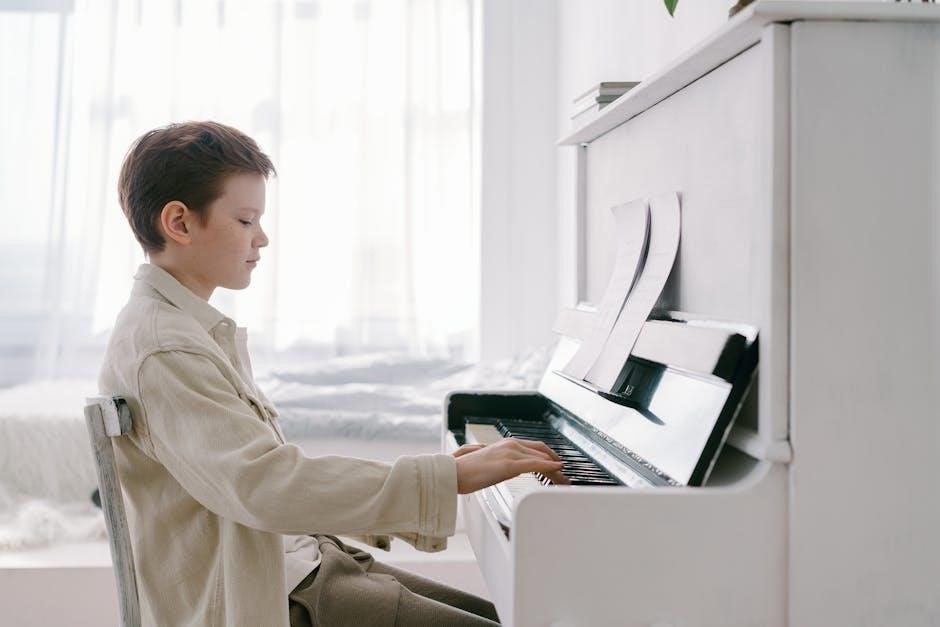
Analyzing the Content of Typical Exercises
“A Dozen a Day” exercises commonly feature scales, arpeggios, and chord progressions, building technical skills through rhythmic variations and focused finger practice.
Scales & Arpeggios in “A Dozen a Day”
“A Dozen a Day” systematically integrates scales and arpeggios, not as isolated drills, but woven into musical contexts. Early exercises often focus on C major, G major, and F major, gradually introducing sharps and flats. The series emphasizes consistent finger patterns and evenness of tone across the keyboard.
These aren’t simply ascending and descending runs; variations in rhythm, articulation (staccato, legato), and dynamics are frequently incorporated. Arpeggios are similarly presented, building hand coordination and reinforcing chord voicings. The methodical approach ensures students internalize these fundamental building blocks, preparing them for more complex repertoire. The PDF versions maintain this structured progression.
Chord Progressions & Harmonization
“A Dozen a Day” subtly introduces chord progressions and basic harmonization principles, particularly in the intermediate and advanced levels. While not explicitly labeled as “chord studies,” many exercises imply harmonic movement through melodic lines and accompanying figures. Common progressions like I-IV-V-I appear frequently, building aural recognition and keyboard familiarity.
The series doesn’t delve into complex theory, but rather focuses on practical application. Students learn to navigate simple chord changes and understand how melodies relate to underlying harmonies. PDF versions of the exercises allow for annotation, aiding in harmonic analysis and personalized learning. This builds a solid foundation for future musical exploration.
Rhythmic Variations & Patterns
“A Dozen a Day” excels at developing rhythmic precision through diverse patterns. Exercises systematically introduce dotted rhythms, syncopation, and varied time signatures, often within a single set. This progressive approach builds a strong internal pulse and enhances rhythmic reading skills. PDF access allows students to slow down tempos for focused practice.
The series avoids overly complex rhythms initially, prioritizing clarity and accuracy. As levels advance, patterns become more intricate, challenging students to maintain consistent timing and coordination. Utilizing a metronome alongside the PDF exercises is highly recommended for optimal results, fostering a solid rhythmic foundation.
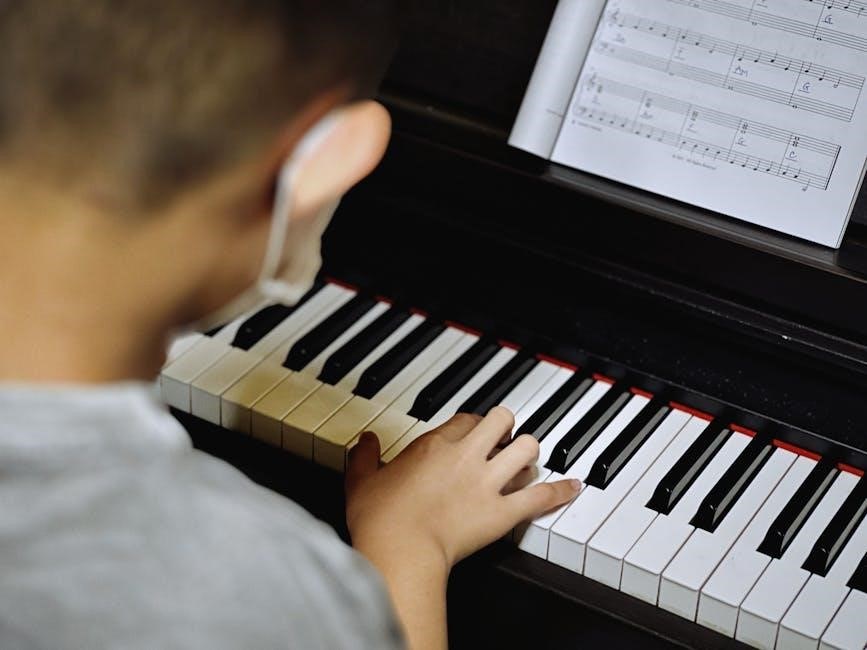
“A Dozen a Day” vs. Other Piano Exercise Books
PDF versions facilitate comparisons; “A Dozen a Day” uniquely balances technical drills with musicality, differing from the purely mechanical focus of Hanon or Czerny.
Comparison with Hanon Exercises
PDF accessibility allows direct comparison: Hanon’s exercises, often available as PDFs, prioritize relentless repetition for finger strength and independence, sometimes at the expense of musical context. “A Dozen a Day,” also frequently found in PDF format, integrates musical elements earlier, offering a more holistic approach. While both aim for technical proficiency, Hanon can feel sterile to some learners.
The “A Dozen a Day” series, through its PDF availability, presents exercises that build technique within musical phrases, fostering a connection between skill development and artistic expression. This contrasts with Hanon’s isolated drills. Consequently, students may find “A Dozen a Day” more engaging and musically rewarding, even when utilizing PDF versions for practice.
Comparison with Czerny Exercises
PDF versions of both “A Dozen a Day” and Czerny exercises are widely available, facilitating direct comparison. Czerny’s studies, often accessed as PDFs, are renowned for their comprehensive technical demands, covering scales, arpeggios, and various pianistic challenges. However, they can be quite lengthy and demanding, potentially discouraging beginners. “A Dozen a Day,” in its PDF form, offers shorter, more manageable exercises.
While Czerny focuses on overcoming specific technical hurdles, “A Dozen a Day” prioritizes consistent, daily practice to build a solid foundation. The PDF accessibility of both allows students to choose based on their learning style and goals. Czerny is often favored by advanced students, while “A Dozen a Day” excels in early to intermediate stages.
Unique Features of Will Schmidt’s Approach
PDF access to “A Dozen a Day” reveals Will Schmidt’s distinct pedagogical philosophy. Unlike many traditional method books, Schmidt’s exercises prioritize musicality alongside technical development. The series emphasizes a relaxed hand position and efficient finger motion, fostering a natural and expressive playing style. This contrasts with some approaches that prioritize sheer speed and power.
Schmidt’s exercises are intentionally short and focused, making them ideal for daily practice. The PDF format allows for easy printing and annotation. His approach avoids overwhelming students with complex pieces, instead building skills incrementally; This makes “A Dozen a Day” a uniquely accessible and effective tool for pianists of all levels.
Software & Digital Tools Related to Piano Practice (Similar to SST Software)
PDFs of “A Dozen a Day” complement piano learning apps and digital sheet music platforms, enhancing practice with tools like metronomes and rhythm trainers.
Piano Learning Apps & Software
Integrating “A Dozen a Day” PDFs with modern piano learning applications offers a blended approach to skill development. Several apps provide interactive lessons, progress tracking, and personalized feedback, which can be effectively paired with the structured exercises found within the “A Dozen a Day” series. Users can upload PDF pages directly into some platforms for focused practice.
Software like flowkey or Simply Piano can analyze playing in real-time, identifying areas for improvement that align with the technical goals of the exercises. This synergy allows students to address specific weaknesses highlighted by “A Dozen a Day” while benefiting from the app’s gamified learning experience and extensive song library. Consider using these tools alongside your PDF studies.
Digital Sheet Music Platforms
Several digital sheet music platforms offer legitimate access to “A Dozen a Day” books and individual exercises, often in PDF format. Musicnotes.com, Sheet Music Plus, and similar services provide a convenient and legal way to purchase and download the material. These platforms typically offer previews, allowing you to assess the content before committing to a purchase.
Purchasing through these channels ensures you receive a high-quality, properly licensed PDF, supporting the copyright holder and avoiding the risks associated with unauthorized downloads. Many platforms also integrate with practice tools and apps, enhancing the learning experience. Explore these options for reliable access to “A Dozen a Day” resources.
Metronome & Rhythm Training Tools
Effectively utilizing “A Dozen a Day” exercises demands precise rhythm and timing, making metronomes and rhythm training tools invaluable. Numerous apps, like Pro Metronome or Tempo, offer customizable tempos and rhythmic patterns, crucial for mastering the exercises. These tools help internalize consistent beats, essential for technical proficiency.
Furthermore, software like Rhythm Trainer provides interactive exercises to improve rhythmic accuracy. Combining “A Dozen a Day” PDFs with dedicated rhythm practice significantly accelerates progress. Consistent use of these tools reinforces timing skills, translating directly into improved piano performance and a deeper understanding of musicality.

User Reviews & Testimonials (Based on Online Discussions)
Online forums reveal positive feedback on “A Dozen a Day” PDFs, praising their effectiveness, though some users cite challenges with consistent daily practice.
Common Positive Feedback
Users consistently highlight the accessibility of “A Dozen a Day” PDFs for immediate practice, eliminating the wait for physical copies. Many appreciate the structured approach, noting it builds foundational technique effectively. Several testimonials mention improved finger dexterity and enhanced rhythmic understanding after consistent use of the exercises.
Furthermore, the clear layout of the PDF format is frequently praised, making it easy to read and follow along during practice sessions. Students and teachers alike value the series’ gradual progression, allowing for steady skill development. The affordability of digital versions, compared to printed books, is also a recurring positive point in online discussions.
Frequently Mentioned Challenges
Despite the benefits, some users report difficulty finding legitimately sourced “A Dozen a Day” PDFs, leading to concerns about copyright and potential malware from unofficial sites. A common complaint revolves around the lack of interactive features within standard PDF formats, unlike dedicated piano learning apps.
Others mention that the exercises, while effective, can become repetitive if not supplemented with more varied repertoire. Some learners struggle with maintaining consistent practice discipline solely relying on the PDF format, preferring the guidance of a teacher or structured software. Ensuring proper hand position solely from a PDF can also be challenging.
Overall Effectiveness & Recommendations
Generally, “A Dozen a Day” remains highly regarded as a foundational technique builder, even in digital PDF format, though supplemental resources are often advised. Users consistently praise its effectiveness in improving finger dexterity and establishing solid hand positioning.
However, it’s recommended to prioritize purchasing PDFs from reputable sources to avoid copyright infringement and security risks. Combining the exercises with a metronome and, ideally, guidance from a piano instructor maximizes benefits. For learners seeking interactive practice, exploring piano learning apps alongside the PDFs is a valuable approach.
The Role of “A Dozen a Day” in Comprehensive Piano Education
PDF versions effectively supplement lessons, enabling focused, independent practice and solidifying technique—crucial for performance preparation and exam success.
Supplementing Piano Lessons
“A Dozen a Day” PDFs serve as excellent supplementary material to traditional piano lessons, reinforcing concepts taught by an instructor. They provide focused exercises for targeted skill development, allowing students to practice independently and solidify their understanding of technique. Utilizing these PDFs between lessons helps maintain consistent progress and prevents skill regression.
The structured nature of the exercises, readily available in PDF format, allows for efficient practice routines. Students can address specific weaknesses identified during lessons, building a stronger foundation. Furthermore, the convenience of digital access encourages more frequent and shorter practice sessions, which can be particularly beneficial for maintaining motivation and achieving consistent improvement. Careful selection of appropriate PDF levels is key to maximizing their effectiveness.
Self-Study & Independent Practice
“A Dozen a Day” PDFs are incredibly valuable for self-study and independent piano practice, particularly for motivated learners. The exercises offer a clear, progressive path for developing fundamental skills without constant instructor guidance. Accessing these PDFs allows students to work at their own pace, revisiting challenging sections as needed.
However, successful self-study requires discipline and a basic understanding of proper technique. While the PDFs provide the exercises, students must ensure correct hand position and finger movements. Regularly recording and critically evaluating practice sessions can help identify areas for improvement. Utilizing accompanying audio examples (if available with the PDF) is also highly recommended for accurate rhythm and phrasing.
Preparing for Performances & Exams
“A Dozen a Day” PDFs serve as excellent preparatory material for piano performances and exams, focusing on technical proficiency. Consistent practice with these exercises builds finger dexterity, strengthens hand position, and enhances rhythmic accuracy – all crucial for successful execution.
The exercises can be used to warm up before performances, ensuring fingers are agile and responsive. For exams, mastering the technical demands within the “A Dozen a Day” series demonstrates a solid foundation to examiners. Students should integrate these exercises into their broader repertoire practice, applying the gained skills to performance pieces for a polished result.