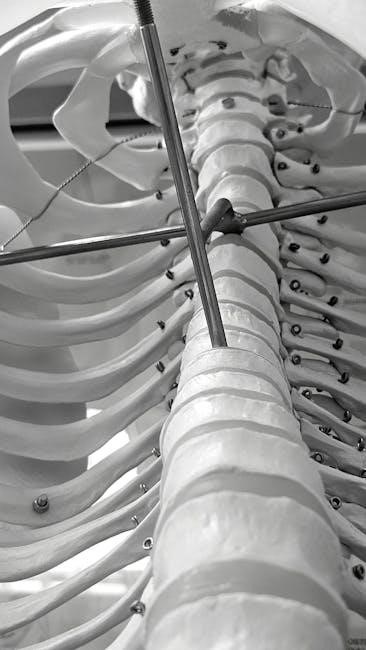
Human anatomy and physiology are foundational medical sciences, exploring the body’s structure and function—essential for healthcare professionals and understanding life itself.
A. Defining Anatomy
Anatomy, at its core, is the scientific study of the body’s structures. This encompasses everything from large, visible organs to microscopic cells and intricate molecular arrangements. Historically rooted in dissection, modern anatomy utilizes advanced imaging techniques.
It explores what structures are present and where they are located, providing a detailed map of the human form. Branches include regional, descriptive, and topographic anatomy, crucial for surgical precision and diagnostic accuracy.

B. Defining Physiology
Physiology investigates the functions of the body’s structures – how they work, individually and collectively, to maintain life. It delves into the chemical and physical processes occurring within cells, tissues, and organs.
This field examines everything from nerve impulses to muscle contractions, and the intricate mechanisms of homeostasis. Understanding physiology is vital for comprehending health, disease, and the body’s remarkable adaptability.
C. The Interrelationship Between Anatomy and Physiology
Anatomy and physiology are inextricably linked; structure dictates function, and function influences structure. You cannot fully grasp one without understanding the other. For example, the heart’s muscular walls (anatomy) enable its pumping action (physiology).
Changes in structure – due to disease or injury – inevitably alter function, and conversely, physiological demands can cause anatomical changes. This dynamic interplay is central to understanding the human body.
II. Levels of Structural Organization
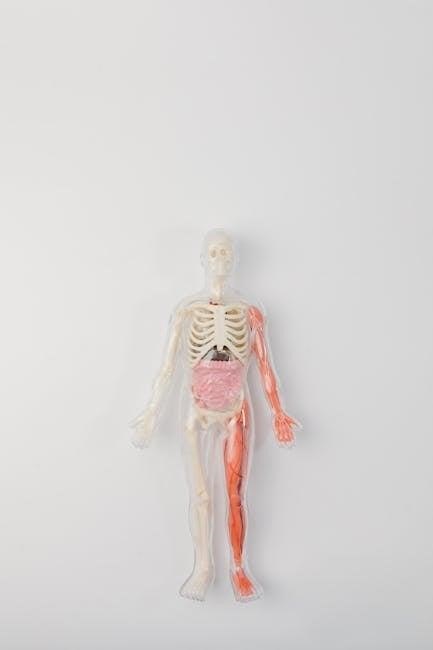
Structural organization progresses from chemicals to cells, tissues, organs, systems, and ultimately, the complete organism, demonstrating increasing complexity and functionality.
A. Chemical Level
The chemical level represents the most fundamental level of structural organization. It encompasses atoms, like hydrogen and oxygen, combining to form molecules – crucial for life. These molecules, such as water, proteins, and DNA, interact to create the complex chemical environment within the body. Understanding these basic building blocks is paramount, as all physiological processes are ultimately rooted in chemical reactions. This level dictates the properties and functions of all subsequent structural levels, influencing cellular activity and overall organismal health.
B. Cellular Level
The cellular level builds upon the chemical level, with cells being the basic structural and functional units of the body. These cells, though diverse in structure and function, share common characteristics like a plasma membrane and genetic material. They perform all essential life processes, from nutrient uptake to waste elimination. Understanding cell structure – organelles, cytoplasm, nucleus – is vital, as cellular dysfunction underlies many diseases. Cells are the smallest unit capable of life and form the foundation for tissues.
C. Tissue Level
At the tissue level, similar cells performing specific functions are organized into tissues. The four primary tissue types – epithelial, connective, muscle, and nervous – each play a crucial role. Epithelial tissues cover surfaces, connective tissues support and connect, muscle tissues enable movement, and nervous tissues transmit signals. Understanding tissue structure and function is key to comprehending organ systems, as tissues are the building blocks of organs and contribute to their overall capabilities.
D. Organ Level
The organ level represents a functional unit composed of different tissue types working collaboratively. Each organ, like the heart or stomach, possesses a distinct shape and performs specific tasks vital for maintaining life. Organs aren’t isolated; their coordinated activity is essential. Studying organs requires understanding how tissues interact to achieve complex functions, bridging the gap between microscopic structure and macroscopic physiological processes within the body.
E. System Level
The system level encompasses groups of organs cooperating to accomplish common functions. For instance, the cardiovascular system – heart, blood vessels, and blood – circulates nutrients and oxygen. Understanding systems requires recognizing interdependencies; the respiratory system provides oxygen the cardiovascular system distributes. Studying systems reveals how the body maintains homeostasis through integrated, coordinated efforts of multiple organs, showcasing remarkable biological efficiency.
F. Organismal Level
The organismal level represents the complete living being, showcasing the highest level of structural organization. All systems function in unison to maintain life. This level emphasizes the interconnectedness of all anatomical structures and physiological processes. Studying the organism requires considering how each level – chemical to system – contributes to overall survival, growth, and reproduction, demonstrating the body’s integrated complexity.

III. Basic Anatomical Terminology
Anatomical terminology provides a standardized method to describe body structures and their relationships, crucial for precise communication in healthcare and study.
A. Anatomical Position
The anatomical position is a universal reference point: standing erect, feet slightly apart, palms facing forward, and arms at the sides. This standardized posture allows for consistent and accurate descriptions of body parts and directions. Understanding this position is fundamental, as directional terms – superior, inferior, anterior, posterior – are always relative to it. It’s the baseline for all anatomical descriptions, ensuring clarity in medical communication and study, avoiding ambiguity when discussing locations and relationships within the human body.
B. Directional Terms (Superior, Inferior, Anterior, Posterior, etc.)
Directional terms describe precise body locations. Superior means towards the head, inferior towards the feet. Anterior (ventral) is the front, posterior (dorsal) the back. Medial is near the midline, lateral away from it. Proximal and distal relate to limb attachments – closer or farther from the trunk. Mastering these terms, always referencing the anatomical position, is crucial for accurately describing anatomical relationships and understanding medical reports.

C. Regional Terms
Regional terms divide the body into specific areas for study. These include the cephalic (head), cervical (neck), thoracic (chest), abdominal (belly), and pelvic (hips) regions. Further divisions encompass the brachial (arm), antecubital (forearm), carpal (wrist), manual (hand), femoral (thigh), crural (leg), tarsal (ankle), and pedal (foot) areas. Utilizing these terms provides a systematic approach to anatomical description and localization.

IV. Body Systems Overview
Body systems—integumentary, skeletal, muscular, nervous, and more—work interdependently to maintain life, each contributing unique functions for overall human well-being.
A. Integumentary System
The integumentary system, encompassing skin, hair, and nails, forms a vital protective barrier against external factors. It regulates body temperature, synthesizes vitamin D, and provides sensory information. Studying its layers – epidermis, dermis, and hypodermis – reveals specialized structures like sweat glands and receptors. Understanding its role in immunity and wound healing is crucial, alongside recognizing common pathologies affecting this expansive organ system. This system’s health directly impacts overall physiological balance.
B. Skeletal System
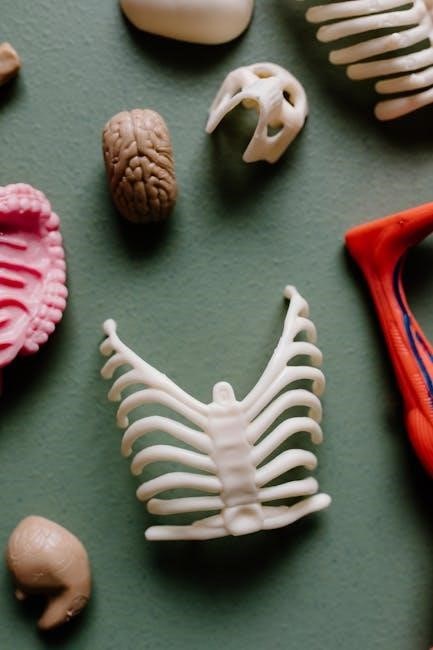
The skeletal system provides structural support, protects vital organs, enables movement, and stores minerals. Composed of bones, cartilage, ligaments, and joints, it’s categorized into axial and appendicular divisions. Understanding bone classifications – long, short, flat, irregular – is key, alongside joint types and their associated movements. Studying bone development, growth, and repair, plus common skeletal disorders, is essential for grasping its dynamic functionality and overall body mechanics.
C. Muscular System
The muscular system facilitates movement, maintains posture, and generates heat. It comprises skeletal, smooth, and cardiac muscle tissues. Skeletal muscles, attached to bones via tendons, enable voluntary movements. Understanding muscle fiber types, contraction mechanisms, and major muscle groups is crucial. Studying how muscles work in antagonistic pairs, alongside common muscle injuries and disorders, provides a comprehensive view of this vital system’s role in bodily function.
D. Nervous System
The nervous system is the body’s rapid control center, utilizing electrical and chemical signals. It’s divided into the central (brain & spinal cord) and peripheral nervous systems. Key components include neurons, synapses, and neurotransmitters. Studying brain regions, nerve pathways, and reflex arcs is essential. Understanding sensory reception, integration, and motor responses provides insight into how the body interacts with its environment and maintains homeostasis.
E. Endocrine System
The endocrine system employs hormones for slower, sustained control, contrasting with the nervous system’s speed. Glands like the pituitary, thyroid, and adrenal glands release hormones into the bloodstream. Studying hormone functions – regulating metabolism, growth, and reproduction – is crucial. Understanding feedback loops and hormone imbalances provides insight into systemic diseases and physiological regulation within the organism.
F. Cardiovascular System
The cardiovascular system, encompassing the heart, blood vessels, and blood, is vital for circulation. The heart’s chambers, valves, and conduction system dictate blood flow. Vessels – arteries, veins, and capillaries – transport oxygen, nutrients, and hormones. Understanding blood composition, pressure regulation, and cardiac output is key. Studying this system reveals connections to respiration and homeostasis, impacting overall body function.
G. Lymphatic System
The lymphatic system, a crucial network of vessels, tissues, and organs, complements the circulatory system. Lymph nodes filter lymph fluid, housing immune cells like lymphocytes. This system plays a vital role in immunity, absorbing fats, and fluid balance. Studying lymphatic drainage patterns, spleen and thymus functions, and immune responses is essential for understanding disease processes and overall health maintenance.
H. Respiratory System
The respiratory system facilitates gas exchange, taking in oxygen and expelling carbon dioxide. Key structures include the nasal cavity, pharynx, larynx, trachea, bronchi, and lungs – specifically the alveoli where gas exchange occurs. Understanding lung volumes, breathing mechanics, and the regulation of respiration is vital. Studying pathologies like asthma and pneumonia provides clinical context for anatomical and physiological principles.
I. Digestive System
The digestive system breaks down food for nutrient absorption, beginning in the mouth and continuing through the esophagus, stomach, small and large intestines. Accessory organs – liver, gallbladder, and pancreas – contribute crucial enzymes and secretions. Understanding peristalsis, enzymatic digestion, and nutrient absorption pathways is key. Studying related disorders, like irritable bowel syndrome, enhances comprehension.
J. Urinary System
The urinary system, comprised of kidneys, ureters, bladder, and urethra, filters blood and eliminates waste as urine. Key functions include regulating blood volume, electrolyte balance, and pH. Nephron structure and function – glomerular filtration, tubular reabsorption, and secretion – are vital to grasp. Studying conditions like kidney stones or urinary tract infections provides practical context.
K. Reproductive System
The reproductive system, differing between males and females, enables procreation. Male anatomy includes testes, ducts, glands, and the penis; female anatomy encompasses ovaries, uterine tubes, uterus, vagina, and mammary glands. Understanding gametogenesis – sperm and egg production – is crucial. Hormonal control of the reproductive cycle and fetal development are key areas of study.
V. Histology: The Study of Tissues
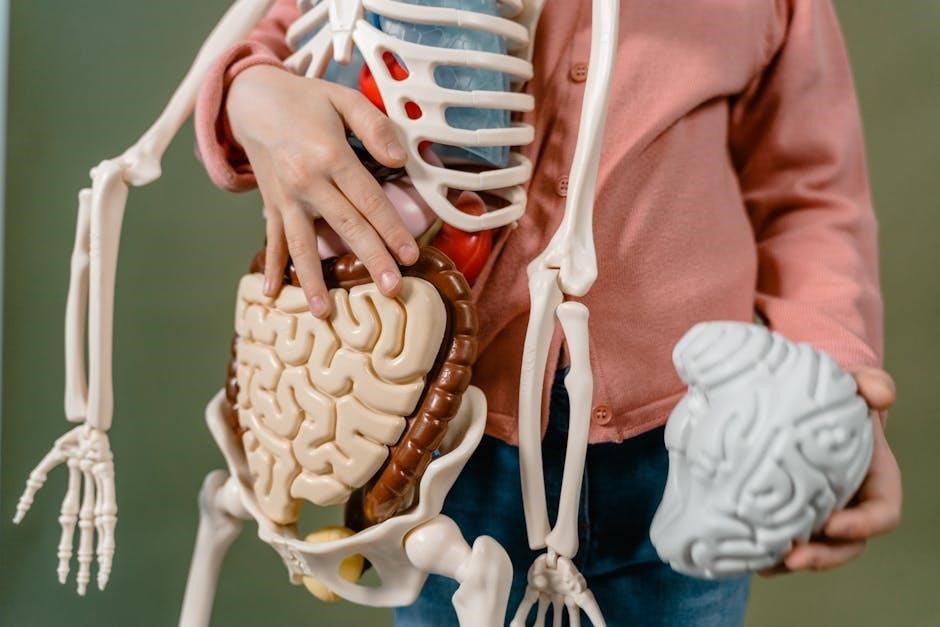
Histology examines tissues – epithelial, connective, muscle, and nervous – revealing microscopic structure and function, vital for understanding organ systems and overall physiology.
A. Epithelial Tissue
Epithelial tissue forms coverings and linings throughout the body, protecting underlying structures and facilitating secretion, absorption, and filtration. Classified by shape – squamous, cuboidal, columnar – and layering, it includes simple and stratified types.
Key functions involve creating protective barriers, like skin, and enabling transport across membranes, such as in the digestive system. Understanding its diverse forms is crucial for comprehending organ function and potential pathologies.
B. Connective Tissue
Connective tissue provides support, connection, and protection for organs, encompassing a wide range of types including bone, cartilage, tendons, ligaments, and blood. Distinguished by abundant extracellular matrix, it offers structural integrity and facilitates transport.
Its primary roles involve binding, supporting, protecting, and insulating body parts. Studying its diverse forms – dense, loose, specialized – is vital for understanding skeletal structure and overall body mechanics.
C. Muscle Tissue
Muscle tissue is specialized for contraction, enabling movement. Three main types exist: skeletal (voluntary movement), smooth (involuntary, organs), and cardiac (heart). Understanding their microscopic structure – filaments, sarcomeres – is crucial for grasping how muscles generate force.
Studying muscle physiology reveals the mechanisms of contraction, energy utilization, and fatigue, essential for comprehending bodily functions and athletic performance.
D. Nervous Tissue
Nervous tissue forms the rapid communication network of the body. It’s composed of neurons – excitable cells transmitting electrical signals – and glial cells, providing support and insulation. Understanding neuron structure (dendrites, axons, synapses) is key.
Studying nervous tissue involves exploring signal transmission, brain regions, and the interplay between the central and peripheral nervous systems, vital for comprehending sensation, thought, and action.
VI. Neuroanatomy: The Nervous System
Neuroanatomy details the structure of the nervous system, encompassing the central (brain & spinal cord) and peripheral nervous systems, crucial for function.
A. Central Nervous System (CNS)
The Central Nervous System (CNS) acts as the body’s primary control center, comprised of the brain and spinal cord. It receives sensory information, processes it, and initiates motor responses. The brain, protected by the skull, governs higher-level functions like thought and emotion. The spinal cord, extending from the brain, relays signals and controls reflexes; Understanding its intricate pathways is vital, as it dictates nearly all bodily functions and responses to stimuli, forming the core of neurological processes.
B. Peripheral Nervous System (PNS)
The Peripheral Nervous System (PNS) connects the CNS to the limbs and organs, acting as a communication network. It consists of nerves and ganglia outside the brain and spinal cord. Sensory neurons transmit information to the CNS, while motor neurons carry commands from it. The PNS is further divided into somatic (voluntary control) and autonomic (involuntary control) systems. Studying its components reveals how the body interacts with its environment and maintains internal balance.

VII. Physiological Processes & Homeostasis
Physiological processes maintain internal stability—homeostasis—through intricate feedback loops, ensuring optimal conditions for cellular function and overall survival.
A. Maintaining Homeostasis
Homeostasis represents the body’s dynamic equilibrium, a crucial process for survival. It involves constant adjustments to internal conditions – temperature, pH, glucose levels – despite external fluctuations. This regulation relies on intricate control systems, utilizing receptors, control centers, and effectors. Disruptions to homeostasis can lead to illness or disease, highlighting its importance. Understanding these mechanisms is fundamental to comprehending physiological function and the body’s remarkable ability to self-regulate, ensuring optimal cellular environments.
B. Feedback Mechanisms (Negative & Positive)
Feedback mechanisms are vital for maintaining homeostasis. Negative feedback reverses a change, like temperature regulation – cooling mechanisms activate when body temperature rises. Conversely, positive feedback amplifies a change, such as childbirth – contractions increase until delivery. While negative feedback is far more common, both systems demonstrate the body’s sophisticated control. Understanding these opposing forces is key to grasping how physiological processes are regulated and how disruptions can occur, impacting overall health.